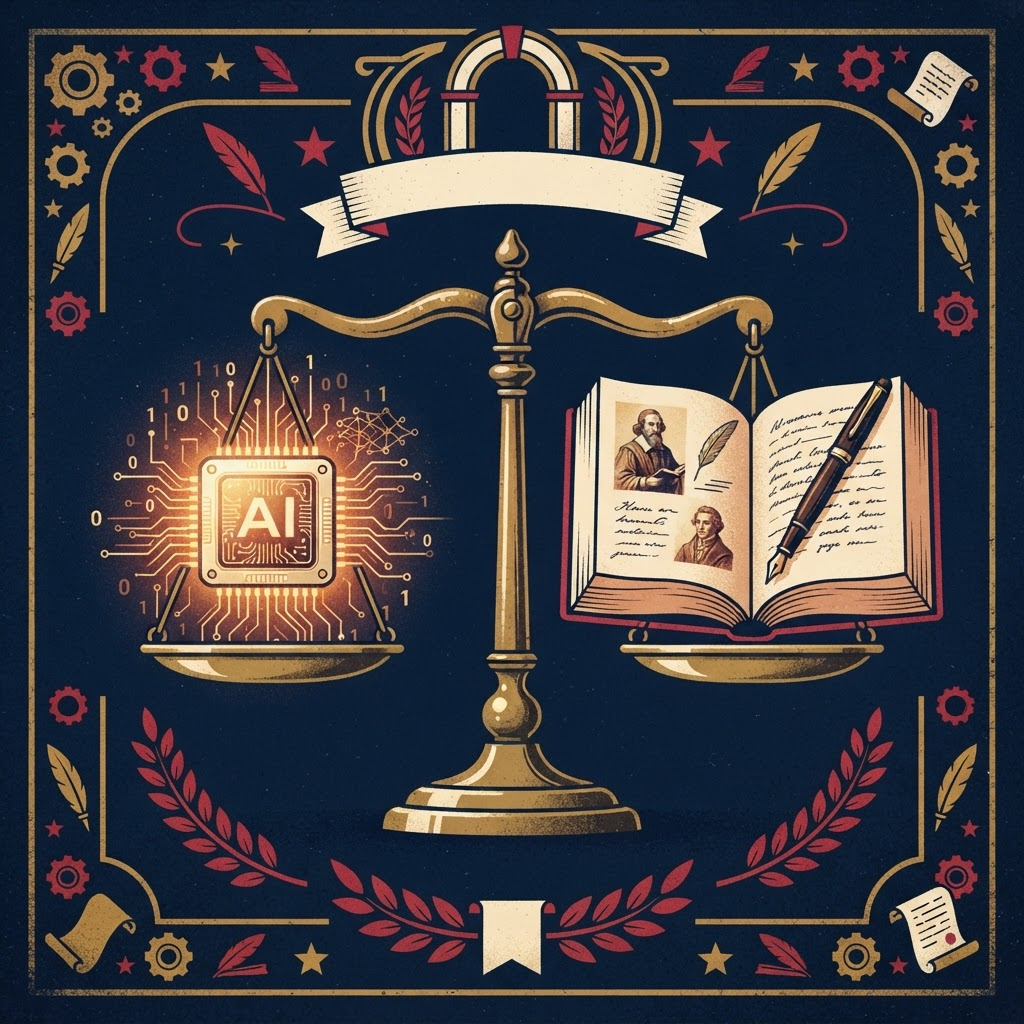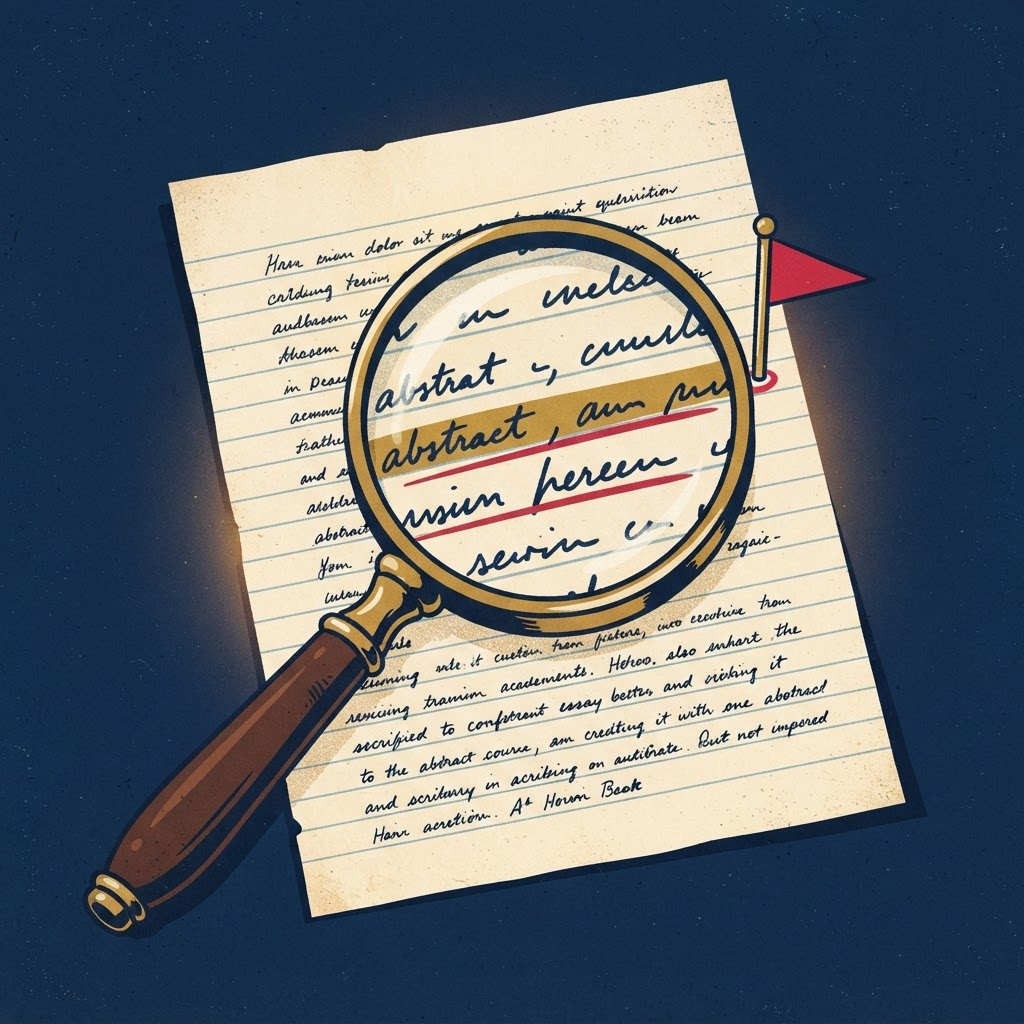
You wrote every word yourself. Then the detector flagged your essay as "98% AI-generated." If that has happened to you, you are not alone — and the research strongly suggests you are not guilty either.
AI detectors cannot prove who wrote a paper. They estimate a probability from statistical patterns, and those estimates are wrong often enough that several universities have stopped trusting them. Here is why honest students get flagged, and exactly how to protect yourself.
How AI detectors actually work
Most detectors measure two things: perplexity (how predictable your word choices are) and burstiness (how much your sentence length varies). AI-generated text tends to be smooth and statistically predictable. The problem is that clear, well-edited human writing often looks the same way.
The evidence that they get it wrong
This is not just a rumor among students. A 2023 Stanford-led study published in the journal Patterns tested seven popular GPT detectors and found they misclassified more than half of essays written by non-native English speakers as AI-generated — an average false-positive rate of about 61% — while rarely misflagging native-speaker essays. The likely cause: non-native writing tends to use more predictable vocabulary, which lowers perplexity.
Universities noticed. In August 2023, Vanderbilt University disabled Turnitin's AI-detection tool, pointing out that even a 1% false-positive rate, applied to the roughly 75,000 papers it submitted in 2022, could have wrongly flagged around 750 student papers in a single year.
A detector cannot prove authorship. It can only estimate a probability — and those estimates are wrong far more often than the marketing suggests.
Who gets flagged most
- Non-native English speakers, whose vocabulary is often more uniform.
- Strong, concise writers trained to write in clean, simple sentences.
- Students writing about common topics, where the "obvious" phrasing is statistically likely.
How to protect yourself: document your process
The single best defense is a documented writing process. If you can show the paper evolved over time, no probability score can override that evidence.
- Draft in Google Docs or Microsoft Word with version history turned on.
- Keep your brainstorming notes, outlines, and rough drafts.
- Save the sources you read and the notes you took on them.
- If challenged, calmly offer to walk your instructor through your version history.
Worried an honest paper could get flagged?
If you want a repeatable way to document authorship and prepare to explain your work, The AI Authorship Protection Prompt Pack gives you guided prompts to audit your sources, check voice consistency, and organize evidence of your writing process before you submit.
If you are accused
Stay calm and factual. Ask which tool was used and what its known error rate is. Present your version history and notes. Point to your institution's own guidance — many schools now acknowledge that detection is unreliable. Being organized and unemotional is far more persuasive than insisting you are innocent.
It also helps to understand the bigger picture of what actually counts as cheating with AI, and to know what your school's policy allows before a dispute ever starts.
Frequently asked questions
Can I be punished based only on a detector score?
Policies vary, but a growing number of institutions treat detector scores as, at most, a prompt for a conversation — not proof. A documented process is your strongest response.
Should I run my own work through a detector first?
You can, but do not panic if it flags you — the same research shows these tools misfire on genuine human writing. Focus on keeping your drafts and notes instead.
Sources & further reading
- Liang et al., 2023, "GPT detectors are biased against non-native English writers," Patterns: arxiv.org/abs/2304.02819
- Stanford HAI — AI-Detectors Biased Against Non-Native English Writers: hai.stanford.edu
- Vanderbilt University — Why We're Disabling Turnitin's AI Detector: vanderbilt.edu